
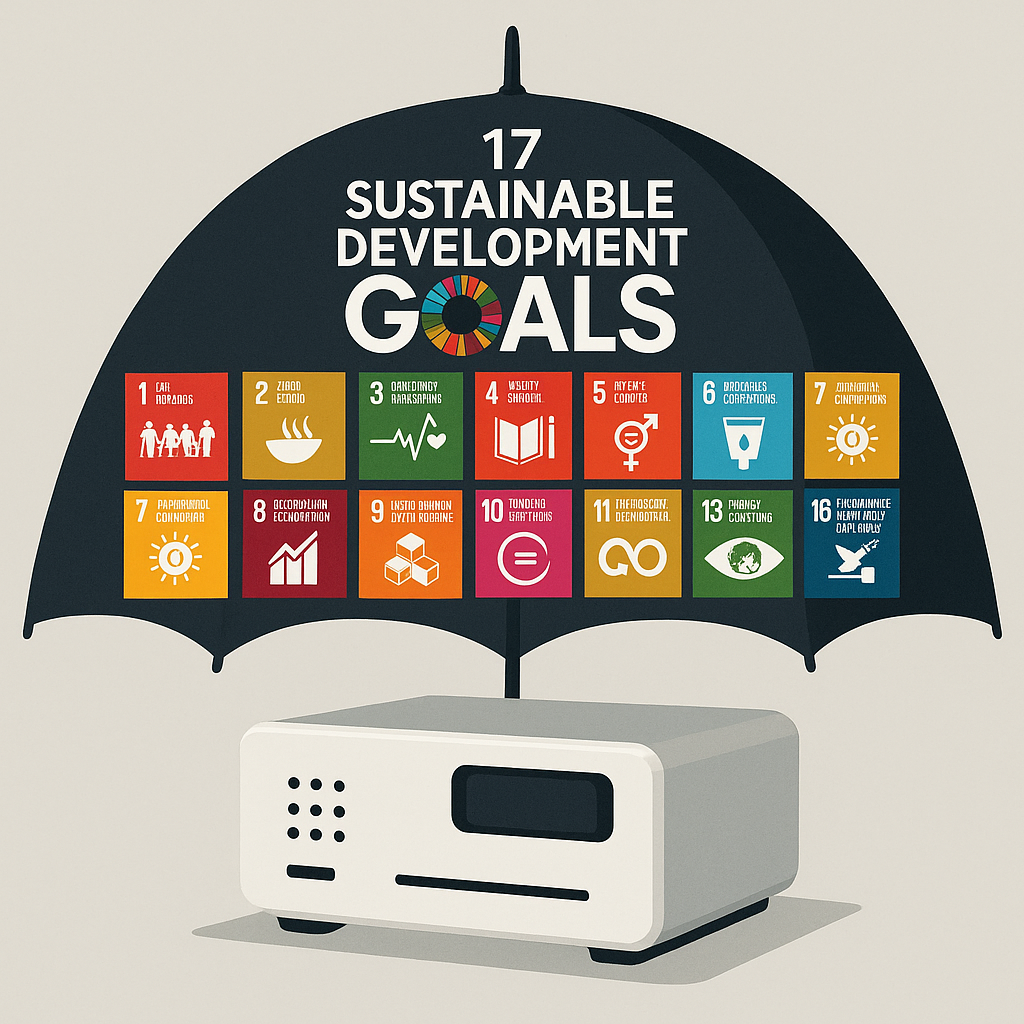
My organisation, a publicly funded applied research institute, likes the UN sustainability goals. Every piece of tech that we develop seems to fit under its very large umbrella. But can we please stop?
This piece is not looking to argue that the 17 Sustainable Development Goals are unimportant or nonsense. They are important. They represent a political statement and ambition to which organisations and political regimes can aspire. They are not, however, a framework through which to understand how new technologies impact society.
These goals need to be put into the right context, as they are extremely difficult to translate into a single activity or technology. If I donate €100 per month to an unemployed person so that they can eat, am I helping to reduce poverty and hunger? Clearly not. When 6G is eventually implemented, and enabling new ways of working, is that economic growth reducing poverty and eliminating hunger? Certainly there’s a difference in scale, but the answer is not an obvious one.
One could argue that 6G, as a piece of communication infrastructure that supports economic activity, it is an important component of economic growth, which can reduce poverty. But at the same time, where those economic benefits accrue depends on access to the technology, which includes costs that those most able to benefit from the technology are least able to incur.
Let’s assume for a moment, however, that one could have a simple explanation of how a new technology can influence these goals. The point about who gets to use new technologies leads to questions about contradictions. Say one creates a piece of technology that unequivocally supports climate action. But only large companies have the scale of roll out this technology, which puts a number of smaller companies out of business, increasing poverty.
What this discussion helps to demonstrate is that technology, in isolation and out of context, cannot proclaim to have a positive influence on sustainable development goals. It can just as easily have a negative influence on these goals of the technology is used in the wrong way.
The reason that this context is important is for two reasons:
- Single, straight-line impact pathways from introducing a new technology to any of the sustainable development goals is wickedly difficult to trace with huge numbers of intervening variables. How users work with new technologies will determine its impact, and when it comes to new technologies, positive and negative impacts can remain largely uncertain or unknown for years to come.
- Given how difficult it can be to determine the impact of new technologies, those looking to accentuate how they positively impact sustainable development will cherry pick use cases–sometimes with the selective use of suppositions–to demonstrate how helpful they are. This can lead to claims of tech-washing.